
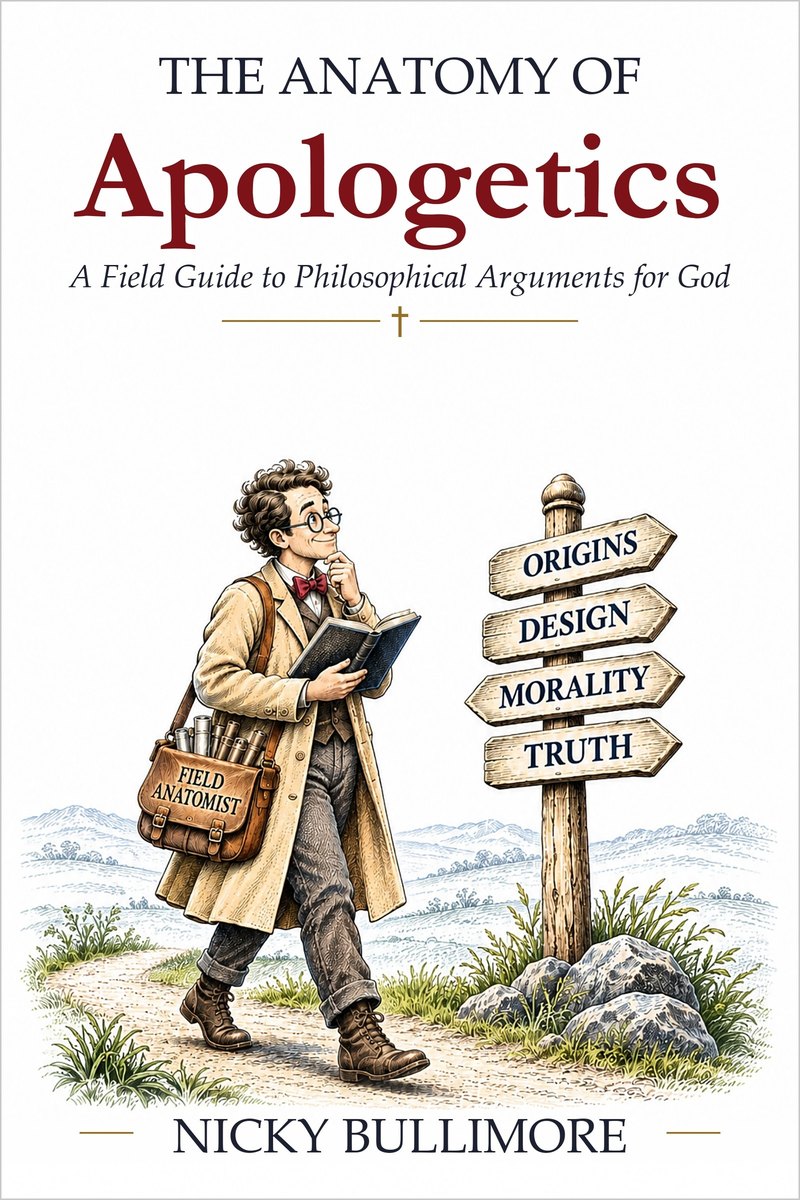
A new book by Nicky Bullimore
The Anatomy of Apologetics
A Field Guide to Philosophical Arguments for God
Have you ever come away from a conversation about God sure that something was wrong with an argument, but unable to say what?
Philosophy and apologetics can seem like subjects for experts only. This book is here to show that they aren’t. With a cheerful field anatomist as your guide, you’ll learn how arguments are put together, how to test them, and where they most often break, then walk through the great arguments for God and the hardest question against him.
Paperback and Kindle · free to read with Kindle Unlimited · the link opens Amazon in your own country
So much has been written about philosophy and apologetics that it’s rather like being handed the keys to an enormous library with no catalogue. This book is my attempt to be the catalogue, or perhaps a friendly guide who can show you around a little.
From the Preface
What’s inside
A field guide in three parts
Every idea is explained in plain English, with everyday examples. No background is needed: just curiosity, and a willingness to follow an argument where it leads.

Part One
The Instruments
The basics of logic and clear thinking: how an argument is built, the two tests every argument has to pass, and why all reasoning starts with trust.
- The Anatomy of a Thought
- The Two Tests of Truth
- The Suicide of Thought

Part Two
The Specimens
The great arguments for the existence of God, each set out at its strongest with the best objections beside it, and the hardest question of all.
- The First Domino
- The Watch, the Eye and the Algorithm
- Guilt, Goodness and the Moral Law
- The Risk and the Revelation
- If God Is Good, Why Is There Suffering?

Part Three
The Practice
How to take apart the arguments you meet in everyday conversation about faith, science and God, whichever side they come from.
- The Socratic Scalpel
The specimens
Four signposts on the road
The great arguments for God, examined one by one: what each claims, how it works, where critics push back, and how well it stands up.

Origins
The First Domino
Why is there anything at all? The argument from the beginning of the universe.
Design
The Watch, the Eye and the Algorithm
Is the world designed? From Paley’s watch to the fine-tuning of the universe.

Morality
Guilt, Goodness and the Moral Law
Where do right and wrong come from, and why do we feel bound by them?
Truth
The Risk and the Revelation
Did Jesus really rise from the dead? Weighing the historical evidence.
And the hardest question.
If God is good, why is there suffering? The strongest argument against God is faced head-on, explored honestly and gently.

Fair to both sides
Steel men, not straw men
It’s easy to win an argument against a weak version of the other side. This book does the opposite: each argument is set out at its strongest, and so are the objections to it.
I don’t hide behind a list of other people’s opinions. Along the way, I share my own view on each of the great questions, treat the other side fairly, and leave you free to reach your own conclusions.
- Tell a strong argument from one that only sounds clever
- Spot the hidden step in an argument
- Recognise the logical fallacies that trip up believers and sceptics alike
- Talk about faith with gentleness and respect
In the satchel
Made to be used, not just read
Every chapter and appendix is there to help the ideas stick, whether you’re reading alone or with others.
“Key points” summaries
Every chapter gathers its main ideas in a few short lines, so they’re easy to remember and revisit.
Practice exercises
Try your new tools on real arguments, with something to do in every chapter.
Illustrations
The field anatomist and his instruments bring each idea to life on the page.
A field guide to fallacies
Appendix A: a quick reference to the common mistakes in reasoning.
Argument summaries
Appendix B: short summaries of each argument in the book.
People, glossary and index
Appendix C profiles the thinkers you’ll meet, and a glossary explains the terms.
For study groups
Ready for your group
The book was written with groups in mind. Appendix D is a guide for groups, with one session for each of the nine chapters: the main idea, questions to talk over, and something practical to try.
A group meeting weekly could work through it in a little over two months. For a taster session, try the free companion lesson here on Bible Study Themes, Introduction to Apologetics: Thinking Clearly About God.

For believers, sceptics and the simply curious
For anyone who has ever asked, “But why?”
Whether you believe, doubt or simply wonder, the big questions about God deserve clear thinking. You don’t need to be an expert to think them through well.
Paperback and Kindle edition. The Amazon link takes you to the store for your own country.