The Burden of Belonging
There’s a particular kind of weight that comes with belonging to a community you love, while knowing something inside it has gone badly wrong. Whether it’s a family, a church, or a nation, we’re often tied to the consequences of choices we didn’t personally make. When a community fails, our first instinct is usually to put some distance between ourselves and the mess. We point the finger, feel a bit superior, and say, “They have failed.”
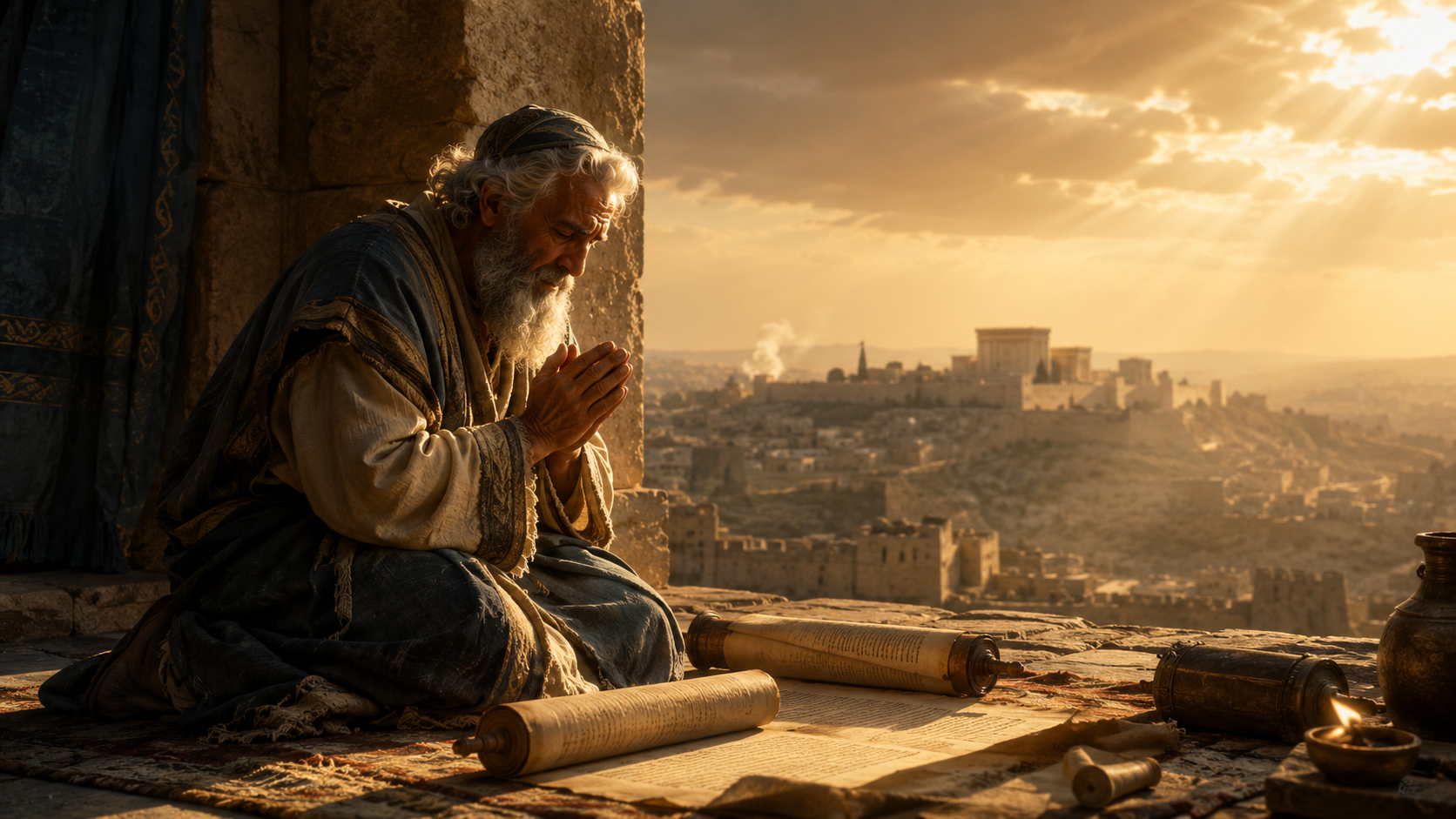
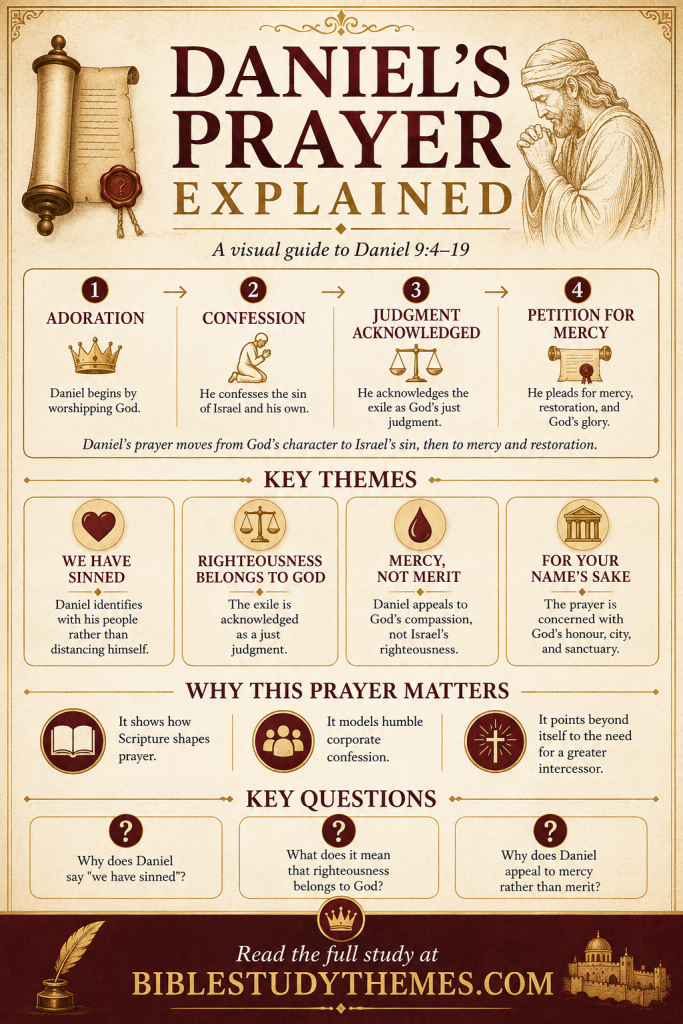
Daniel handles a similar situation differently. In Daniel 9:4–19, we find an honest, unflinching prayer that shows us how to hold guilt and mercy together without losing either. Instead of putting distance between himself and his people’s rebellion, Daniel stays connected. His prayer moves from the safety of “they” to the honesty of “we.”
Adoration as the Anchor
Daniel starts with worship. In verse 4, he addresses God’s character before he asks for anything. It resets his focus before he gets to the actual request. Daniel calls God the one who “keepeth covenant and mercy,” which is a direct echo of Deuteronomy 7:9. Something worth noting: The word “dreadful” in verse 4 isn’t about being scared of God. It carries the sense of “awesome reverence,” a God so holy and powerful that He commands real respect. Because Daniel grounds his prayer in God’s faithfulness rather than the community’s worthiness, his hope rests on who God is.
And I prayed unto the LORD my God, and made confession, and said, O Lord, the great and dreadful God, which keepeth covenant and mercy with them that love him and keep his commandments;” (Daniel 9:4)
The Radical Power of “We”
Perhaps the most striking thing about this prayer is the way Daniel confesses as part of the group, not just for himself. Daniel himself wasn’t in rebellion toward God, yet throughout verses 5 and 6, he repeatedly uses the words “we,” “us,” and “our.” This is perhaps not surprising since Daniel is portrayed throughout the book as a man of exceptional integrity, “highly esteemed” by heaven itself. Yet he refuses to stand apart from his people. He piles up the ways the nation had failed in verses 5 and 6: sinning, acting perversely, doing wickedly, rebelling. By choosing to say “we have sinned,” Daniel puts himself inside the nation’s guilt, even though he wasn’t personally responsible for most of it. He belongs to God’s people, so he shares in what they’ve inherited and what they now have to face. For Daniel, praying for others means giving up any sense of superiority and choosing to stand with them, even when that’s painful.
When Judgment is Proof of Faithfulness
In verses 11–14, Daniel names the desolation of Jerusalem for exactly what it is: a “confirmed word,” the judgment God had promised centuries earlier through the Law of Moses, specifically the covenant warnings in Leviticus 26 and Deuteronomy 28. Daniel recognises God’s just judgment, but he also knows God always keeps His word. If God kept His warnings of judgment, He’ll be just as faithful to His promises of restoration. The disaster Israel faced actually becomes proof of God’s faithfulness, not evidence against it.
O Lord, righteousness belongeth unto thee, but unto us confusion of face, as at this day; to the men of Judah, and to the inhabitants of Jerusalem, and unto all Israel…” (Daniel 9:7)
Praying the Bible Back to God
Daniel’s prayer mirrors Solomon’s dedication prayer in 1 Kings 8, almost point for point. Solomon had asked that if Israel were ever exiled and turned to pray toward their land and the temple, God would “hear from heaven.” Daniel is living out the very situation Solomon pictured, turning his face toward the desolate sanctuary. He’s praying the Bible back to God, almost as if he had Solomon’s prayer open in front of him. It shows us something about prayer: often the most effective prayers are simply God’s own words, handed back to Him right when we need them most.
Mercy, Not Merit
By the time Daniel reaches verses 18–19, he isn’t trying to argue that Israel deserves better treatment. He drops any claim to deserving God’s help and rests everything on God’s mercy instead. This is the posture God asks for before He acts.
- Human righteousness: not good enough on its own to move God to act.
- Divine compassion: the only real foundation for the hope of restoration.
“O my God, incline thine ear, and hear; open thine eyes, and behold our desolations, and the city which is called by thy name: for we do not present our supplications before thee for our righteousnesses, but for thy great mercies.” (Daniel 9:18)
The Motivation: For the Lord’s Sake
Why should God act at all? Daniel’s final appeal in verses 17 and 19 is “for the Lord’s sake” and “for thine own sake.” His main concern is God’s own reputation, tied up completely with the city and the people who carried His name. He’s not the first to argue this way. Moses and Joshua made the same appeal, asking God to act for the sake of His reputation among the nations. Daniel understands that if God’s people stay in ruins, the watching nations might get the wrong idea about who God is. In the end, his request for restoration is more about God’s glory than the people’s own comfort.
Looking Toward the Greater Intercessor
Daniel is a great example of someone praying for others. Daniel was a righteous man who identified with sinners, but he was still a man who needed mercy himself. What he longed to see restored was a physical city and an actual building, the temple. This points forward to Jesus Christ, described in Hebrews 4:15 as our sinless High Priest. While Daniel identified with sinners, Christ went further: He bore our sin. If our deepest exile is being cut off from God, Christ is the one who ends that exile and opens the way back to Him.
A Question for the Quiet
Daniel’s prayer moves in a clear line: he praises God’s character, admits where the nation had gone wrong together, and then asks for help based entirely on mercy. It manages to avoid both self-righteousness and despair, which is no small achievement. The challenge for us usually sits in our vocabulary. It’s far easier to talk about a church, a family, or a nation’s failures in the third person, as though we were reporting on a mess we happened to walk past. Daniel’s prayer suggests a harder, more honest habit: next time you catch yourself saying “they’ve got it wrong,” pause and ask whether “we” is closer to the truth. That single shift in pronoun is where his prayer actually starts.