
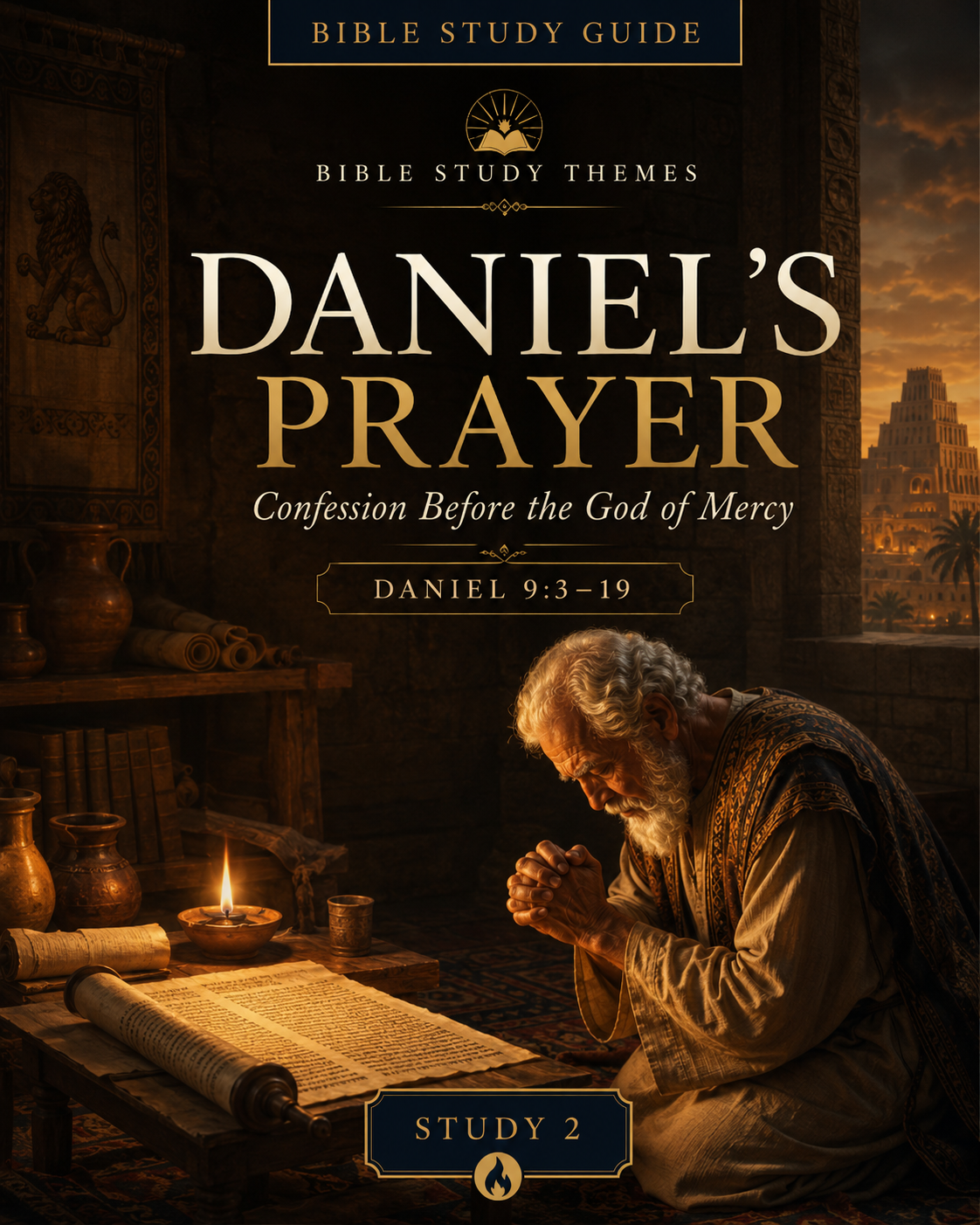
Daniel’s Prayer
£7.99
Why does one of the most faithful men in Scripture pray, “we have sinned”? Daniel does not stand apart from his people’s failure; he brings it before God with humility, confession, and covenant faith. This study explores one of Scripture’s most powerful prayers and asks what true repentance looks like when hope depends entirely on the mercy of God.
Daniel’s 70 Weeks: From Exile to Messiah
Prefer the complete set? This study guide is also available inside the full series bundle.
A complete personal Bible study in one guide
Each 28-page study guide takes you on a journey deeper into Scripture, through structured stages, original language insights, and rich theological discussion. Here's some of what every guide includes:
- Visual Study Infographic
- Stage-by-Stage Approach
- Key Word Definitions
- Greek & Hebrew Originals
- Theological Debate Analysis
- People & Places
- Evaluation Questions
- Core Claims & Main Emphasis
- Chapter Structure & Key Verses
- Cross-Reference Index
- Test Your Knowledge
- Further Reflection Prompts

Description
Daniel’s prayer is one of the most moving prayers of confession in Scripture. Though Daniel is presented throughout the book as faithful, courageous, and devoted to God, he does not separate himself from the failure of his people. He does not pray, “they have sinned,” as though Israel’s rebellion belongs only to others. Instead, he stands with the covenant people and says, “we have sinned.” His prayer is marked by humility, reverence, honesty, grief, and deep confidence in the mercy of God.
This study explores Daniel 9:4–19 as a model of covenant-shaped prayer. Daniel acknowledges that God is righteous in His judgment, that Israel has broken the covenant, and that the exile is not random misfortune but the consequence of rebellion against the Lord. Yet Daniel’s prayer is not hopeless. He appeals to God’s mercy, not Israel’s merit. He pleads for restoration, not because the people deserve it, but because God is faithful to His name, His promises, His city, and His covenant purposes.
Rather than treating Daniel 9 as though it begins with prophecy mechanics, this guide slows down and pays attention to the spiritual atmosphere of the chapter. The seventy weeks prophecy is given in response to prayer — not detached curiosity, not speculation, not a desire to decode the future, but heartfelt intercession before God. Daniel’s posture helps shape the way the whole prophecy should be read. Before Gabriel speaks of timelines, decrees, Messiah, and the final week, Daniel is on his knees confessing sin and seeking mercy.
Throughout this study, readers will reflect on repentance, corporate confession, covenant judgment, intercession, and the character of God. The guide invites you to consider what it means to pray honestly in the face of failure, to trust God’s righteousness even in discipline, and to seek restoration on the basis of His mercy. It also helps readers see how Daniel’s prayer prepares the way for the prophetic revelation that follows.
This session is ideal for those who want to go deeper than prophecy charts and engage the spiritual heart of Daniel 9. It shows that the seventy weeks prophecy is not merely about dates and fulfilment, but about sin, mercy, covenant faithfulness, and the God who hears the prayers of His people.
Themes covered in this study:
Explore more on this theme: Browse all →





Reviews
There are no reviews yet.